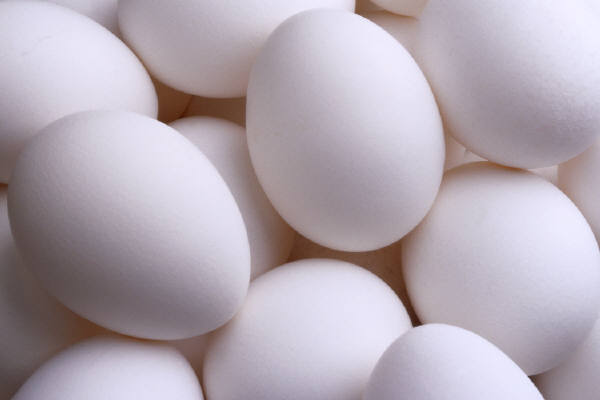
I put together a series of white on white images, to give me ideas for shape, composition and tone.
Friday, 29 January 2010
White on white
I put together a series of white on white images, to give me ideas for shape, composition and tone.
Colour Palette

white on white

white on eggshell
My container is of egg shells, I feel they represent cervical cancer well as well as being in keeping with the white on white theme. I've gathered some white on white colour palettes. These I found on a self repair website but I felt they strongly linked with my theme in terms of colour and shape.
Artist Research


Lorraine Berry creates artworks and installations using new media technology. Her work has been exhibited extensively in the UK and internationally. Her practice raises questions as to the nature of reality and perception and often uses illusion, interactivity and visual awareness as a means of challenging preconceptions.
Monday, 25 January 2010
The Daily Mail list of 'Things that give you cancer'
I found this facebook group that student Hugh Davies of The Kings School Canterbury created, he'd sourced every article the daily mail had published on what gives you cancer.
The claims vary from water, to crayons, bacon and shaving.
They've linked teen sex with cervical cancer too, they say "In England, women do not qualify for NHS screening until they reach 25, perhaps ten years after they may have contracted HPV, the sexually transmitted virus that causes most cases of cervical cancer." and adding "The study in the British Journal of Cancer into why poorer women have a higher risk of the disease found they tended to have sex four years earlier than more affluent women."
Sunday, 24 January 2010
Woman's Own Article

 In an copy of Woman's Own magazine 12 October 2009, there was an article on people who had over come cancer and what they say has helped them through the ordeal. This is about looking at the emotions in a positive light. What I found most striking about this article was the story told by Helen Martin 34, who's sister made her 'A girl's Chemo Survival Kit' which included gifts for every side effect chemo could possibly have. This included a pair of sexy knickers with a note saying "You may not feel sexy, but atleast you can look it."
New Cancer Jab

This was in Woman's Own magazine 12th October 2009. This is obviously great news and what's more great is that it is free for girls aged between 12-18 years. It is a shame though that the jabs are so expensive for over 18s and while yes you can't put a price on your life I don't think many people are gonna pay £405 for a prevention towards only 1 type of cancer, but you can definately say it's a step in the right direction.
Saturday, 23 January 2010
Facts on Cervical Cancer
- Cervical cancer is the twelfth most common cancer in women in the UK and the third most common gynaecological cancer after uterus (womb) and ovary.
- There are around 2,800 new cases of cervical cancer diagnosed in the UK each year, that is around 55 women every week.
- More than half of all new cases of cervical cancer are diagnosed in women under 50 years, that’s around 1,650 cases each year.
- Cervical cancer in girls under 25 is rare with only 50 cases reported a year.
- Overall, cervical cancer incidence rates in Britain have almost halved in the last 20 years.
- Cervical cancer accounts for 1 in ten cancers diagnosed in women worldwide.
- Cancer of the cervix is the most common cancer diagnosed in women in Southern Africa and Central America.
- Around two thirds of women with cervical cancer survive their disease for five years or more.
- Cervical cancer survival is higher in women diagnosed at a younger age. Women under 40 years of age have survival rates of more than 85%.
- Around 940 women die from cervical cancer each year in the UK.
- In the UK, it is rare for young women to die from cervical cancer; almost 80% of all cervical cancer deaths occur in women aged 45 and over.
- Cervical cancer death rates have fallen almost two-thirds in the last 30 years.
- Worldwide, cervical cancer accounts for almost 1 in ten female cancer deaths.
- Infection with the human papillomavirus (HPV) is the main risk factor and a necessary cause of cervical cancer.
- Women with HIV/AIDS are at significantly increased risk of cervical cancer.
- Infection with the sexually transmitted diseases, herpes simplex virus-2 or Chlamydia trachomatis, may increase risk of cervical cancer.
- Women with a sister or mother who has had cervical cancer are at increased risk of developing it themselves.
- Smoking increases risk of cell cervical cancer.
- Long term use of the oral contraceptive pill increases the risk of cervical cancer.
- The NHS Cervical Screening Programme was set up in 1988 by the Department of Health.
- Cervical screening can prevent around 75% of cancer cases in women who attend regularly.
- HPV vaccination in schools was introduced into the national immunisation programme in 2008, for girls aged 12-13.
Friday, 22 January 2010
Artist Research


Nina Katchadourian cut out hundreds of Finlands unnamed Islands out of paper, they were placed in mircoscopic slides on aluminum sleeves.
Thursday, 21 January 2010


Tuesday, 19 January 2010
Artist Research


Monday, 18 January 2010
Artist Research


Anniken Amunden is a textile artist who uses her cancer experience as inspiration for her textile pieces. Using textile manipulation processes Anniken recreates the cancer cells that were in her body, to form giant sculptural pieces. There is an irony in her designs as they look beautiful but are actually life threatening.
Wednesday, 13 January 2010
Research for Module 4 Brain Receptors

A lack of specific brain receptors has been linked with schizophrenia in new research by scientists at Newcastle University.
In work published today in the Proceedings of the National Academy of Sciences, the team has found that NMDA receptors are essential in modifying brain oscillations – electrical wave patterns – which are altered in patients with schizophrenia.
Schizophrenia is one of the most common serious mental health conditions in the UK and can cause a range of different psychological symptoms, including hallucinations and delusions. One in 100 people will experience at least one episode of acute schizophrenia during their lifetime and it affects men and women equally. While its exact cause is unknown, most experts believe that the condition is caused by a combination of genetic and environmental factors.
Tuesday, 12 January 2010
Rsearch for Module 4

Abnormal abdominal cells found in a smear test, currently smear tests are not available for under 25s.
One in three women under the age 25 will have an abnormal result compared with one in 14 for older women, the ACCS said, meaning that there are many false positives identifying abnormal changes in cells that often return to normal without treatment.
Cervical cancer in under-25s remains rare, with only 56 cases diagnosed in England in 2006.
Research for Module 4
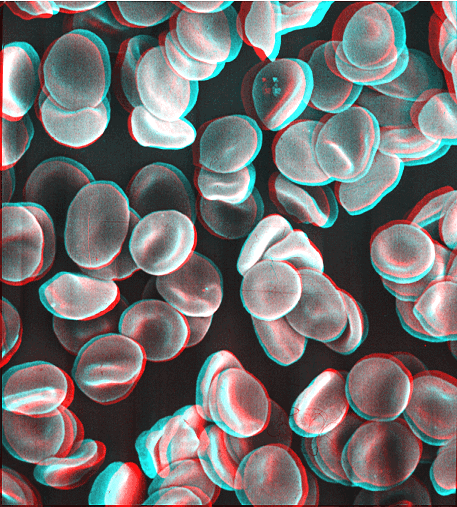
I've noticed with a lot of the cell slides, they contain really beautiful shapes, colours and patterns but for most of the cells I've looked at they are potentially life threatening abnormal cells that cause diseases. It's a real issue in society that affects a lot of people. In a design aspect I like juxtapositioning the aspects of potentially life threatening illnesses with the ironic beauty of the slides and I'd like to explore the aspect of these issues to give meaning behind my work.


Research for Module 4 DNA Modules showing Liquid Crystal Phases

A microscope image showing that a solution of tiny DNA molecules has formed a liquid-crystal phase. The DNA molecules pair to form DNA double helices, which, in turn, stack end-to-end to make rod-shaped aggregates that orient parallel to one another. Image by Michi Nakata, University of Colorado.
A team led by the University of Colorado at Boulder and the University of Milan has discovered some unexpected forms of liquid crystals of ultrashort DNA molecules immersed in water, providing a new scenario for a key step in the emergence of life on Earth.
CU-Boulder physics Professor Noel Clark said "We found that even tiny fragments of double helix DNA can spontaneously self-assemble into columns that contain many molecules. Our vision is that from the collection of ancient molecules, short RNA pieces or some structurally related precursor emerged as the molecular fragments most capable of condensing into liquid crystal droplets, selectively developing into long molecules."
Research for Module 4 Liquid Crystals


Liquid crystals (LCs) are a state of matter that has properties between those of a conventional liquid and those of a solid crystal[1]. For instance, an LC may flow like a liquid, but its molecules may be oriented in a crystal-like way. There are many different types of LC phases, which can be distinguished by their different optical properties (such as birefringence). When viewed under a microscope using a polarized light source, different liquid crystal phases will appear to have distinct textures. The contrasting areas in the textures correspond to domains where the LC molecules are oriented in different directions. Within a domain, however, the molecules are well ordered. LC materials may not always be in an LC phase (just as water may turn into ice or steam).
Examples of liquid crystals can be found both in the natural world and in technological applications. Most modern electronic displays are liquid crystal based. Lyotropic liquid-crystalline phases are abundant in living systems. For example, many proteins and cell membranes are LCs. Other well-known LC examples are solutions of soap and various related detergents, as well as tobacco mosaic virus.
Research for Module 4

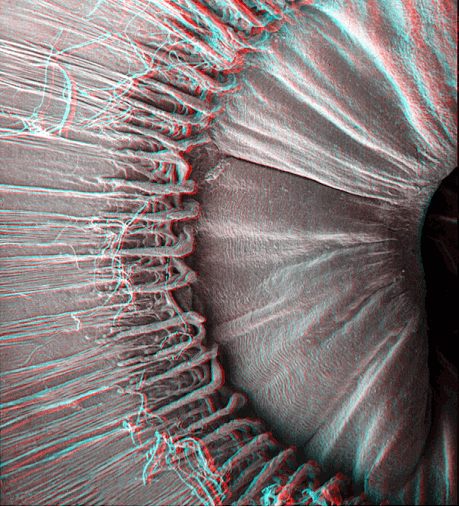
The brief we've been given is to explode ideas around the theme Containers, so I'm looking at what's contained within a body. I'll be looking at cells, veins, water, arteries, organs, bones etc. Also Liquid Crystals, I'm already aware of their strong formations of pattern and colour.




Subscribe to:
Posts (Atom)